TL;DR: Doctrine matters. It’s not possible for us to have any real unity if we don’t have unified, unwavering beliefs. This is why we have creeds: to preserve the faith delivered once for all, the faith handed to the Apostles by Christ and preserved unconquered by the Holy Spirit in the Church.
“But who do you say that I am?” (Mark 8:29)
When Jesus asked this question of the Apostle Peter 2,000 years ago, he asked a question that we all need to be ready to answer, as does each and every person who comes in contact with the Gospel. As Christianity spread, and the number of those who professed faith in Christ grew, the number of interpretations of that question also grew, sometimes at great peril to the Church.
What is a Creed?
Creed comes from the Latin word credo, which means “I believe.” I know that for many people from Evangelical and Charismatic backgrounds, the term Creed may feel far too restrictive and formal, so they’ve developed their own statements of belief or confessions of faith; whatever it may be called, it is ultimately a Creed. As Anglicans, we have three creeds we use: the Apostles’ Creed, the Nicene Creed, and the Athanasian Creed. Article VIII of the Articles of Religion says they “ought thoroughly to be received and believed: for they may be proved by most certain warrants of holy Scripture.” As a quick side note, the American revision of the Articles in 1801 left the Athanasian Creed out of that article, though it is still in the Historical Documents section of our Prayer Book.
Creeds are not unique to Christianity. Judaism professes the Shema Yisrael (“Hear, O Israel: The Lord our God, the Lord is one,” Deuteronomy 6:4), and Islam professes its creed, the shahada, which says, “There is no god but God; Muhammad is the messenger of God.”
Creeds in the New Testament
In the early Church, there were simple creeds that addressed the problems facing the various churches. A great example is what is referred to as the Pre-Pauline Creed of 1 Corinthians 15:3–7:
For I delivered to you as of first importance what I also received: that Christ died for our sins in accordance with the Scriptures, that he was buried, that he was raised on the third day in accordance with the Scriptures, and that he appeared to Cephas, then to the twelve. Then he appeared to more than five hundred brothers at one time, most of whom are still alive, though some have fallen asleep. Then he appeared to James, then to all the apostles. (1 Corinthians 15:3–7, ESV)
It’s called the Pre-Pauline Creed because it is a creed that Paul is clearly quoting, one that existed before he encountered Christ, as we see from his words “what I also received” in verse 3.
St. Paul quotes another early creed when he writes to St. Timothy: “Great indeed, we confess, is the mystery of godliness: He was manifested in the flesh, vindicated by the Spirit, seen by angels, proclaimed among the nations, believed on in the world, taken up in glory” (1 Timothy 3:16).
These show how the Church was already defining and refining answers to Christ’s question, “Who do you say that I am?”
The Creed of the Early Church
Just as the New Testament communities developed creeds as safeguards around correct teaching, the Early Church faced issues of its own and needed to define, not invent, doctrine. The best-known Creed in Christendom is the Nicene Creed. In the fourth century, a priest named Arius of Alexandria was teaching that the Son was a created being, denying Christ’s full divinity. This heresy came to be known as Arianism, and it threatened sound Christian doctrine and our understanding of who Christ is. The leaders of the Church came together in the city of Nicaea in 325, and tradition tells us that 318 bishops, the successors to the Apostles, agreed on a formula to articulate the person of Christ. Only two bishops refused to sign, and they went into exile with Arius. In 381, the First Council of Constantinople expanded the creed, articulating the doctrine of the Holy Spirit more fully, and that fuller text is the Nicene Creed we say today. The faithful affirm this belief regularly to protect themselves against false teaching. The beauty of the Creed is best explained by the late Yale professor Dr. Jaroslav Pelikan, who said, “The singing of the creed is a very important and cherished way of indicating a universality of the faith across not only space but time — to know that in the Philippines this morning, this was the creed that was recited and to know that the Emperor Justinian in the sixth century and my late father and grandfather all affirmed this, all of us together.”
Why does it matter?
There’s an idea of unity among several groups of Christians that exists apart from shared doctrine. It seems to me that there’s a laissez-faire attitude towards doctrine and belief, as if an understanding of the nature of God, man, salvation, and so on were of less importance than a semblance of unity.
Sadly, I’ve heard several Christians say they are Christians because of a unique experience or a feeling they get. I’m not going to say that there’s no place for personal feelings or experience within Christianity, only that they aren’t all we need. C. S. Lewis put it well in Mere Christianity: “Doctrines are not God: they are only a kind of map. But that map is based on the experience of hundreds of people who really were in touch with God.” Other faiths draw heavily on emotion and personal experience too. Latter-day Saint missionaries, for example, invite people to pray and wait for a “burning in the bosom” as confirmation (Doctrine and Covenants 9:8), and many join on that basis, even though the LDS church teaches things far outside the safety of the Nicene Creed and historic Christian teaching, like the idea that God the Father was once a man. When faith and truth are based primarily on experience, how does one question something like this? When we place no emphasis on truth and correct doctrine, doors like this are left wide open.
If people are taught to base their religious belief solely on emotional responses, how can they be “prepared to make a defense to anyone who asks you for a reason for the hope” found in the Gospel (1 Peter 3:15)? The Apostles never appeared to anyone and discussed how an encounter made them feel; instead, they boldly and firmly proclaimed the teachings of Jesus Christ and the revelations of the Prophets.
Even in the New Testament there were those who changed the teachings delivered by the Apostles, and, as St. Paul taught, “a little leaven leavens the whole lump” (Galatians 5:9). The Epistles of St. John were written in large part to encourage the faithful to remain steadfast in right doctrine and not to follow false teachers.
That’s why the New Testament warns us to “watch out for those who cause divisions and create obstacles contrary to the doctrine that you have been taught,” and not to “be led away by diverse and strange teachings” (Romans 16:17; Hebrews 13:9). Instead, we are encouraged to “keep a close watch on yourself and on the teaching. Persist in this, for by so doing you will save both yourself and your hearers” (1 Timothy 4:16).
The successors to the Apostles took the teachings and traditions handed to them, preserved them, and passed them on to their own successors. That’s the goal of a creed: to give the faithful within the community a set of boundaries of safe doctrine. As Jaroslav Pelikan put it, “Tradition is the living faith of the dead.”
After all, Christ called us all to be one, right?
In short, it’s not possible to truly be one when we can’t agree on what doctrines are essential for salvation. “For the time is coming when people will not endure sound teaching, but having itching ears they will accumulate for themselves teachers to suit their own passions, and will turn away from listening to the truth and wander off into myths” (2 Timothy 4:3–4). The creeds give us formulas of doctrine that explain what we believe.
St. Irenaeus of Lyons, writing around the year 180, described the Church’s faith this way:
As I have already observed, the Church, having received this preaching and this faith, although scattered throughout the whole world, yet, as if occupying but one house, carefully preserves it. She also believes these points [of doctrine] just as if she had but one soul, and one and the same heart, and she proclaims them, and teaches them, and hands them down, with perfect harmony, as if she possessed only one mouth. (Against Heresies 1.10.2)
If we are not committed to keeping that faith, what are we committed to?
This is why we have creeds: to preserve the faith delivered once for all, the faith handed to the Apostles by Christ and preserved unconquered by the Holy Spirit’s operation in the Church.
Our three creeds
The Church in the West has three creeds we use in our practice.
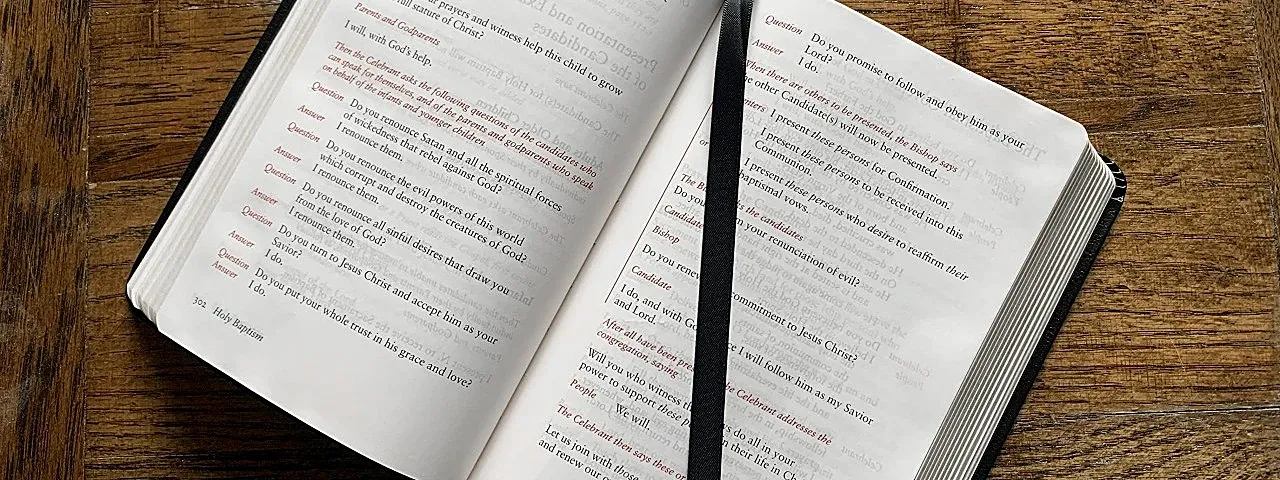
The Apostles’ Creed grew out of the baptismal creed of the church in Rome. It is the creed we say at Baptism and in Morning and Evening Prayer, and our Baptismal Covenant asks it of us as three questions.
The Nicene Creed is the creed of the Eucharist, confessed by Christians East and West alike. It is also where East and West part ways over a single phrase, the Filioque, which we’ll discuss, along with the confusion around it, in Part III.
The Athanasian Creed, known by its first words as the Quicunque Vult, sets out the doctrine of the Trinity and the Incarnation more fully than either of the others.
The next three parts of this series look at each of the creeds in turn.