Originally published in The Living Church on November 27, 2026. Republished here with thanks.
Months after my chrismation at Pascha (Easter), I encountered the tradition of the Nativity Fast, the Orthodox cognate of the Western Church’s Advent. During the fast, which began on November 15, we kept six weeks without meat or dairy, and had some longer prayers which put us in a posture of anticipation. When we finally made it to the Great Vigil for the Nativity (Christmas Eve), we were ready to receive the incarnate Christ child. Although I missed the Christmas services of my upbringing, I felt more prepared for the celebration of Christ’s birth than ever before.
When I came into the Anglican tradition, I assumed I would lose that kind of serious preparation. There were obvious changes: four weeks instead of forty days, violet instead of red paraments. But what surprised me was that my new tradition did keep the reverence and expectation of the season. It is regrettable that more of my fellow Anglicans do not appreciate the Advent resources in the Prayer Book tradition.
Advent is a preparation
The season of Advent anticipates not only the annual commemoration of Christ’s first coming but also his second coming in glory to judge both the living and the dead. St. Cyril of Jerusalem, for example, tells us plainly that the Church doesn’t preach one advent of Christ, but a second also.
This perspective certainly is not limited to the East. The Western Church’s St. Bernard wrote of three advents. One might consider Dr. Cole Hartin’s Covenant essay on this topic, published in Advent 2025. Christ’s first advent was his birth in Bethlehem, when God took our nature. But Bernard affirms that Christ will come again in glory. In between those two advents is one far less obvious: our Lord Jesus comes now, into our souls, in both spirit and power. In addition to commemorating Christ’s birth at a historical moment or anticipating his return in glory, we also welcome him into our hearts and lives here and now.
The weary world around us, full of people who are lonely, hurt, grieving, exhausted, or so distracted by the cares of the world, needs that threefold approach. Advent, then, offers a way to orient ourselves, our hearts and our minds, in prayer.
A fast from the West
Advent began in the West as a fast and was originally quite a bit longer. The Council of Saragossa in 380 required the faithful to be in church daily from the middle of December through Epiphany. St. Gregory of Tours credits his fifth-century predecessor Perpetuus with setting a fast three days a week from the feast of St. Martin (November 11) until Christmas, a fast that came to be called St. Martin’s Lent. The Council of Tours in 567 directed monks to fast every day in December until Christmas. Rome began an Advent season later and settled on the four Sundays we observe in the Western Church today, with lessons and prayers that have an eschatological framing.
So the forty days I kept as an Orthodox Christian and the four weeks I keep now as an Episcopal priest are both ancient traditions in the Church. They developed in tandem, side by side. Constantinople, Gaul, Spain, and Canterbury all fasted.
Advent in the Anglican tradition
In the first Book of Common Prayer (1549), Thomas Cranmer wrote a collect for the First Sunday of Advent in which we ask God for his grace so that we might cast away the works of darkness and put on the armor of light. In 1662 a rubric was added directing that this collect be repeated every day, with the other collects of Advent, until Christmas Eve. Only one other collect in the Prayer Book is treated this way: the collect for Ash Wednesday, said every day in Lent. In a sense, the whole Advent season is built to accumulate. We are supposed to hear about wearing the armor of light over and over so that, at some point, we might actually listen to what’s being said and put it on.
If we look further back in the Prayer Book, at the Table of Vigils, Fasts, and Days of Abstinence, we’ll also find the Ember Days of Advent and the Vigil of the Nativity appointed as fasts. We never stopped fasting, but somewhere along the way, people stopped looking at the tables.
In the 17th century, John Cosin published his Collection of Private Devotions (1627) in part to show just how much the Church of England’s fasts and hours were truly catholic and ancient, and not just some unreformed late medieval Roman novelties. In his classic work Holy Living, Jeremy Taylor wrote about the Church’s liturgical seasons as instruments for our holiness instead of mere practices for their own sake.
The Tractarians of the 19th century, likewise, were deeply committed to Advent. In The Christian Year, John Keble wrote poems for each Sunday through Advent. Edward Pusey preached on the importance of fasting even when fasting had become uncommon for this season. Arguably one of the best resources for Advent comes from John Henry Newman, whose sermon “Watching” says, “He watches for Christ who has a sensitive, eager, apprehensive mind; who is awake, alive, quick-sighted, zealous in seeking and honouring Him; who looks out for Him in all that happens.”
All of these writers, and so many others, were formed in the Prayer Book tradition and left us a great deposit of the ancient faith in the English language.
Advent at home
Advent is best kept not only in our life together as a church, in all we do together even beyond our liturgies, but also in our homes.
An Advent wreath in your home. Pick up or make an Advent wreath for your home and put it somewhere prominent. We have ours on our dinner table, so every night at dinner we light a candle. In addition to lighting the successive candles, we pray the collect appointed for the week each night. If you have kids, this is a great way to engage and form them by letting them participate: let them light the candles or, if they’re too young, blow them out. The whole practice takes less than two minutes but is a blessing for all.
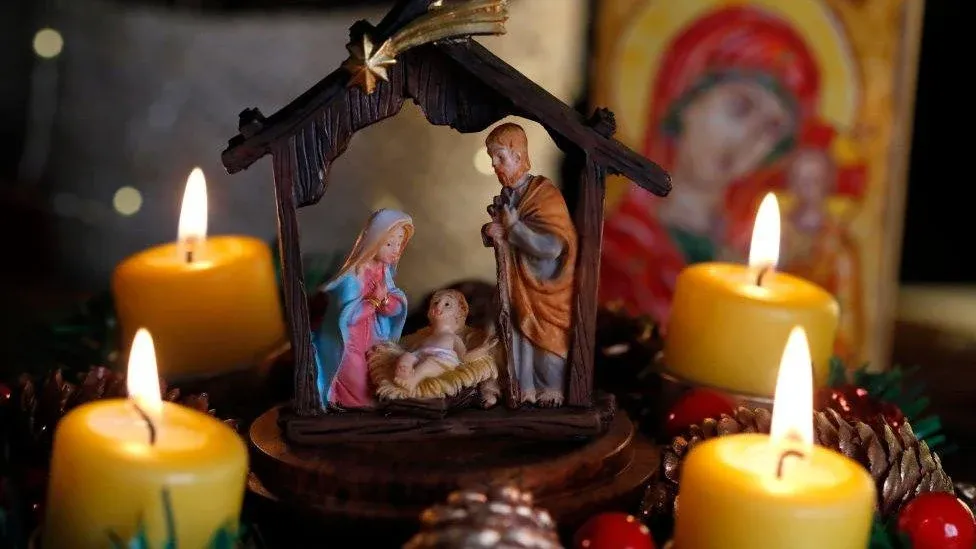
Put out your crèche, but keep it empty. Go ahead and set up your manger scene wherever you like it, but keep it somewhere prominent, where it is seen, and keep it empty until Christmas Eve. You might consider progressively populating the crèche week by week: add the animals and the innkeeper, then the shepherds, then Mary and Joseph. But only add the Christ child on Christmas Eve. Then set up the Magi and let them move so they arrive at Epiphany. This gives your little ones, or older ones who need it like me, a way to see what’s happening.
Use the calendar, and feast during the fast. We have some great saints to remember during Advent, and you can add traditional practices on those days. On St. Nicholas’ Day, December 6, let your kids leave out their shoes overnight and drop in candy or coins. On St. Lucy’s Day, December 13, eat sweet buns and light candles, since her feast is about light in the darkest part of the year. There is a lovely tradition of the eldest daughter in the household presenting the buns to the family. There can be joy in the midst of this season while we stay sober and watchful.
Pray the Great O Antiphons during the last week. Read or pray the O Antiphons from December 17 to 23. If your family sings, reads, or listens to one verse of “O Come, O Come, Emmanuel” each of those nights, you’ve prayed the antiphons! The Sarum tradition began a day earlier, on December 16, so that it could add an eighth, O Virgo virginum, on the 23rd. That is an English inheritance, and it is why the Prayer Book kalendar marks O Sapientia on December 16.
Fast from something. Fasting isn’t about becoming some sort of spiritual superhero. Pick something you feel you should set aside in these days of watching and waiting. Or consider giving to those in need. Advent needs to be more than just our liturgies.
Keep the Twelve Days of Christmas. Now comes the fun part. For so many people, Christmas ends on December 25, and they start taking everything down on the 26th. If we do this, we’ve kept the fast and then skipped the feast. What a terrible thought! Christmas starts on Christmas Day and runs to Epiphany.
What now?
Someone once looked at my home manger scene and asked where everyone was. It took me aback, because the practice of waiting for the Christ child has become second nature. That conversation is something of a microcosm of the entire Advent season.
I used the opportunity to tell my friend that we keep the manger empty because it’s a reminder that creation is waiting on God, who will keep his promise. He has already come once in humility, and now we are waiting for his promised return in glory. Advent gives us four weeks of practice and keeps that trustworthy promise at the forefront of our minds.
Christ’s promise, this hope within us, is something Christians should keep every day. It should be something we desire so deeply that we reorient our lives towards that hope. But how busy and distracted we get in our hearts, minds, and even in our very bodies! Advent is the time to reorient and cry out Maranatha.
For the world around us, Christmas is over by December 26, but for us, it’s just starting. May we grow in anticipation of Christ’s return and in our love for him and for others. May that love and hope burn within us throughout Advent, and may the light of his Incarnation shine brightly through all of Christmastide.